
Acting Out
On the invention of social network theory, psychodrama, & the missing chapter in Ella Fitzgerald's life.

Last spring, while doing deep archival research (opening every finding aid at the Harvard archives, ctrl+f “audio”) I came across a box of undigitized tapes in the collection of a man named Jacob Levy Moreno. He was an Austrian social scientist best known as the father of Psychodrama, a therapeutic theory of questionable rigor that posits that the stage, rather than the couch, is the best place to work through your problems. Rather than talk about your complicated family dynamics, better to get together with a bunch of strangers and a therapist/director and re-enact them.
A lot of these sessions were recorded. The recordings had never been digitized. Gold mine.
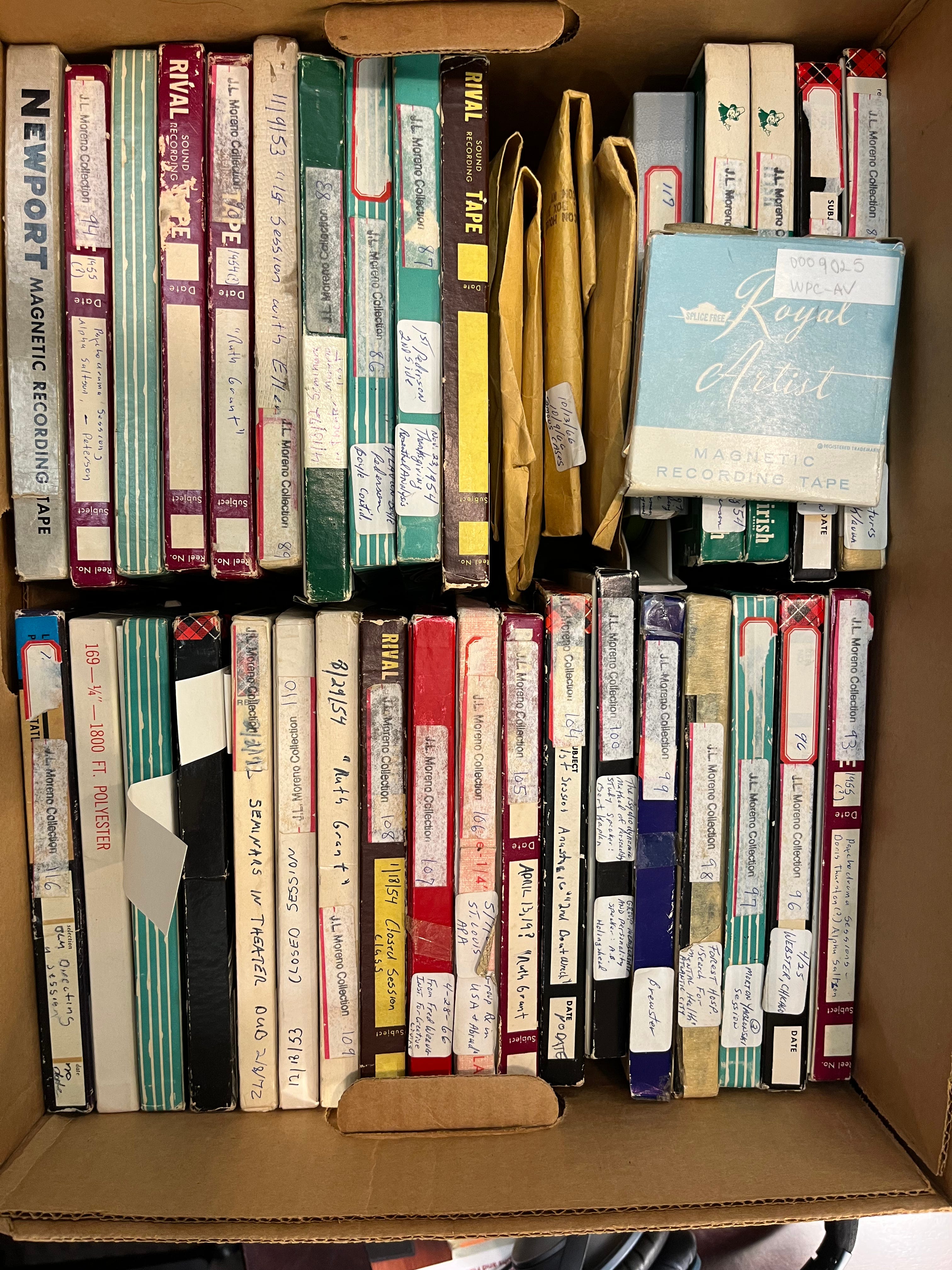
I went to the archives and rooted around. Over the course of the research, I learned about Moreno’s other major contribution to social science — sociometry, the forerunner of social network theory, a field that’s determined much of how we think about the circulation of information (the epidemiology of ideas) and how social media works today. He really launched the field in a dramatic experiment at a women’s reformatory in Hudson, NY, between 1932 and 1934, at the exact same time as its most famous ward was imprisoned there: Ella Fitzgerald.
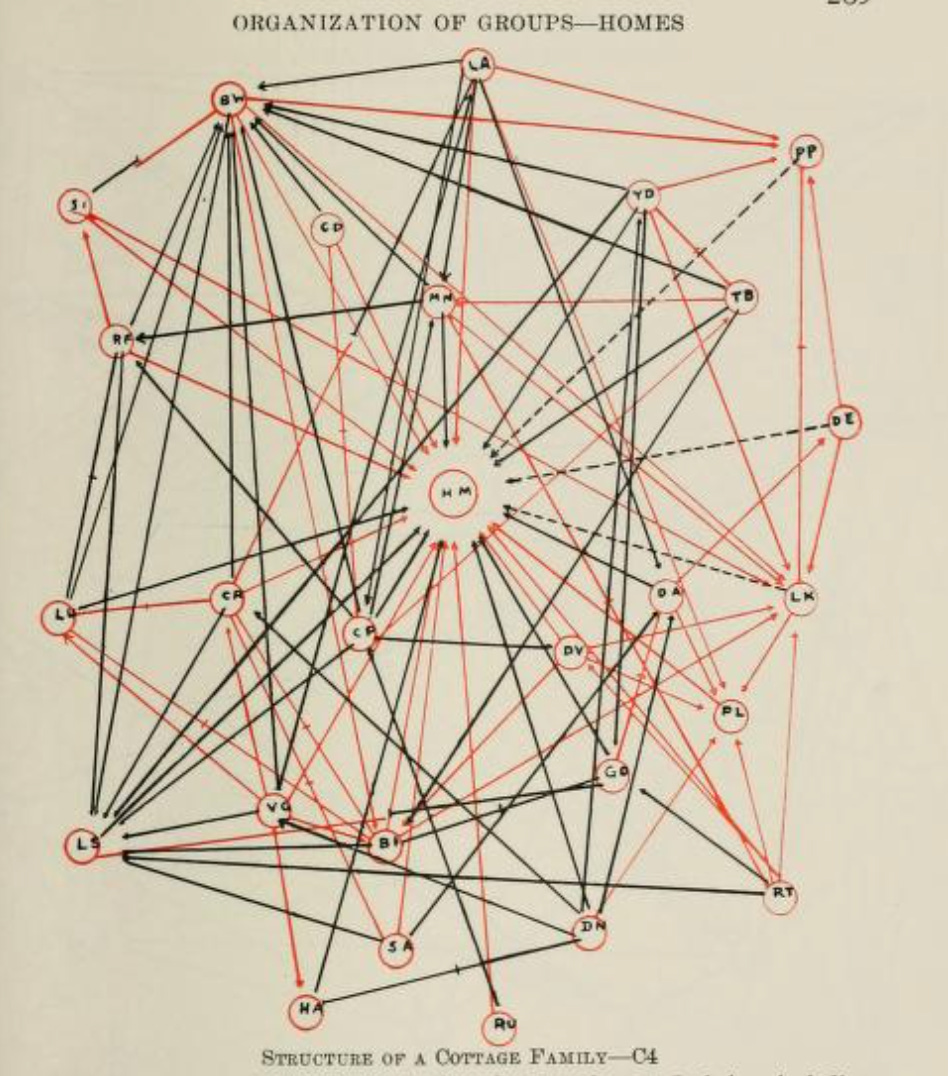
The school was, on its surface, progressive and utopian; beneath the surface, something much darker. Fitzgerald’s experience cut against Moreno’s study in a way that I thought underlined the blindness in a supposedly scientific way of grasping social problems. So I left psychodrama behind for sociometry.
You can hear the resulting episode here. But today I wanted to write a bit about psychodrama…
Acting out
Psychodrama was a lifelong project for Moreno. He’d started improv theaters in Vienna and also in New York City, at Carnegie Hall no less. He was interested in creative spontaneity, and the dynamics in groups that encouraged or repressed that kind of spontaneity. This is the interest that bifurcated into sociometry and psychodrama, but I think at their core the two are linked by an unspoken idea: We create ourselves by performance in the eyes of others. Social media today perfectly exemplifies that — the performance of an identity, reinforced by the network it creates.
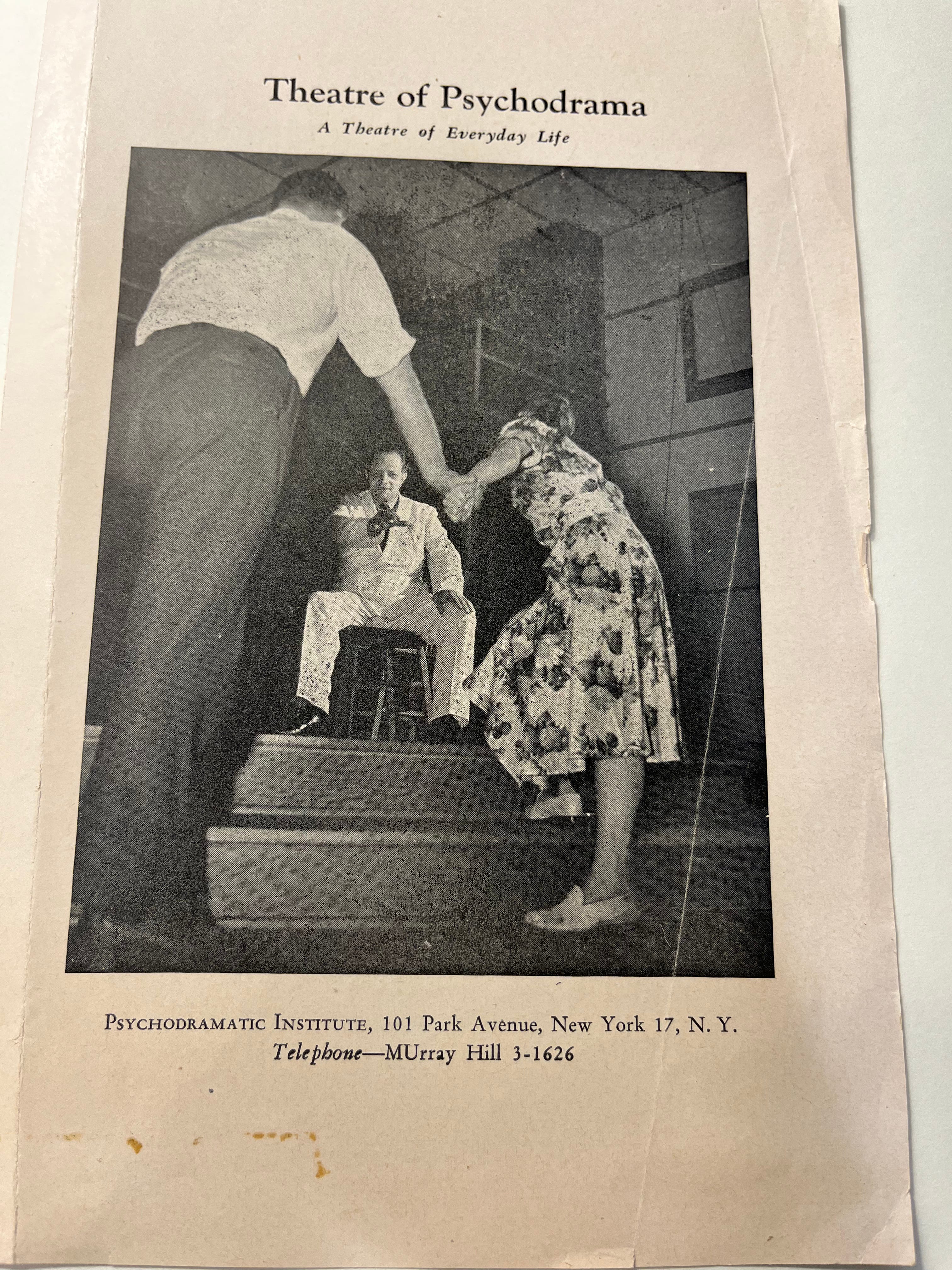
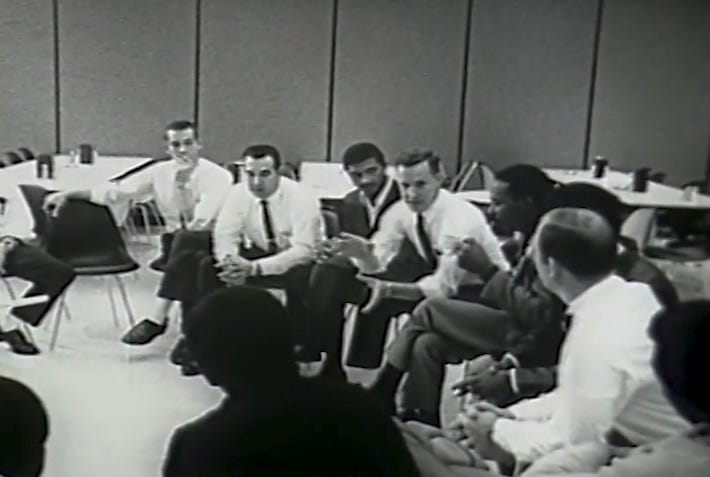
Moreno had an institute in Beacon and an outpost in Manhattan (Woody Allen famously attended). But in the postwar years, Moreno’s science was co-opted by corporations looking to smooth over troubled dynamics between managers and employees. In the late 1960s, for example, General Motors brought a Moreno-trained facilitator to navigate the racial tensions between Black line workers and White supervisors. The documentarian William Greaves captured it on a film called In The Company of Men.
The film is fascinating, if unpleasant, to watch. The Black employees re-enact their altercations with the White staff with a level of frustration unmatched by their managers, who take the whole thing as a lark. In the pivotal moment, the White & Black staffers meet and reverse roles, then switch back. The management learns to call the Black staffers “fella” and “man” rather than “boy.” The narrator celebrates the wonders of psychodrama. Roll credits, sponsored by General Motors.
Moreno’s psychodrama is a forerunner to a lot of our contemporary HR culture. It is, I think, why new employees at Google and Netflix take improv classes. It was, in its initial form, a revolutionary and quite progressive idea. But Moreno’s Achilles’ heel was always his megalomania, and his urge to institutionalize his ideas in the grandest possible way. He consistently traded any revolutionary potential inherent in sociometry or psychodrama in favor of bigger platforms and institutional buy-in. What results is your most banal sensitivity training, an inconsequential role reversal that ultimately just reaffirms a pre-existing hierarchy, and papers over systemic problems.
It reminded me of early modern European festivals like Carnival, which featured a lot of role reversal between elites & peasants: They’ll let you be king for a day if you’re a fool from then on.
Further listening
You can listen to the Moreno / Fitzgerald episode here. I also spoke about it with Malcolm Gladwell on Revisionist History over here. Earlier this week, I talked about Ella Fitzgerald on WNYC at the end of this segment (along with a bit on New York songwriting machines & invasive monk parakeets).
Those tapes were indeed gold and I’m still planning to do a psychodrama project, but in the meantime, you can witness Moreno in action here. His son, the historian of science Jonathan Moreno, also has a good book on the intellectual history of his ideas called Impromptu Man.